
What Your Walls and Floors Say About the Care You Provide
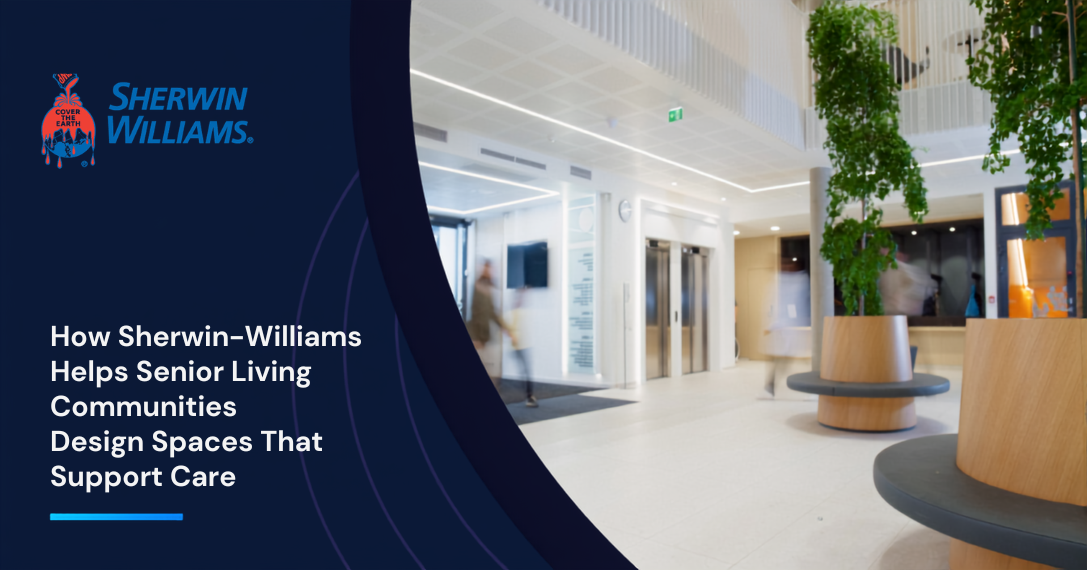
Walk into a well-designed senior living community, and you feel it before you can name it. The lighting is warm. The hallways are easy to read. The colors feel calm rather than clinical. There is a sense, however subtle, that the people who built this space were thinking about the people who would live in it.
Walk into a community that has not been updated in years, and that feeling is absent. The message those spaces send, to residents, to families touring for the first time, and to the staff working long shifts, is harder to ignore than most operators realize. The physical environment of a senior living community is not a backdrop to the care being delivered. In many ways, it is part of the care itself.
Color Matters More Than You Think
Most people know intuitively that color affects mood. What is less commonly understood is how dramatically color perception changes with age.
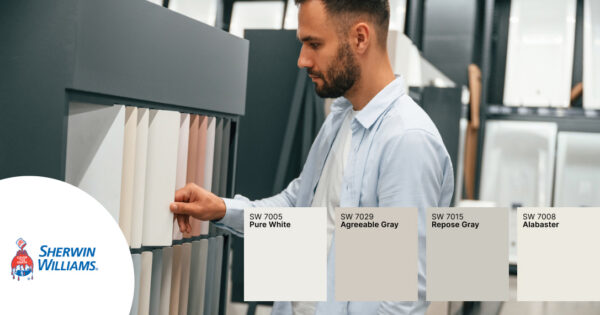
As the eye ages, the lens yellows and the ability to distinguish between certain hues diminishes. Subtle differences in wall color that seem clear to a designer in their thirties may be nearly invisible to an 85-year-old resident. This means that contrast, not just color choice, becomes essential. A bathroom fixture, for example, that blends into its surroundings is not just an aesthetic problem. It is a safety one.
Research published in Frontiers of Architectural Research found that warm colors like yellow are better suited to activity spaces where residents benefit from higher energy, while cooler tones like green support rest in bedrooms. Getting this right does not require a complete renovation. It requires intentional choices and the right partner to guide them.
In memory care specifically, color contrast at mealtimes has shown remarkable results. Studies have found that residents with dementia eat significantly more when food is served on plates that contrast sharply with the table surface beneath them. Something as considered as wall color adjacent to a dining table can influence how much a resident eats. These details compound.
Flooring Is a Safety Decision
Flooring decisions in senior living communities are often driven by budget cycles and aesthetics, but they should also be driven by fall data. The CDC estimates that between 50 and 75 percent of nursing home residents experience a fall each year, at roughly twice the rate of community dwelling older adults. Environmental factors, including flooring choice, surface pattern, and glare, contribute meaningfully to that number. High gloss finishes create visual confusion. Bold patterns in carpet can be misread as depth changes by residents with cognitive impairment, causing hesitation and stumbling. Matte, solid-colored surfaces reduce these risks.
Flooring also affects noise levels, cleaning efficiency, and how long a surface holds up under constant use. In high traffic areas, the wrong choice means earlier replacement cycles, added operational disruption, and higher long term costs. In clinical and dining areas, seamless surfaces reduce infection risk. In resident rooms and living spaces, softer flooring absorbs impact and improves acoustic comfort. Although none of this is complicated, it requires thinking about flooring as a functional decision rather than a finish.
The Environment Is Part of the First Impression
Families choosing a senior living community for a loved one are making one of the most emotional and consequential decisions of their lives. When they walk through the door for a tour, what they see shapes what they believe about the care inside.
A 2024 U.S. News Senior Living survey found that 50 percent of families identified the in-person tour as the single most influential factor in their decision, outranking websites, physician referrals, and word of mouth. The visual and sensory experience of a community is not secondary to its reputation. For many families, it is the reputation. Refreshed common areas, updated corridors, and thoughtfully painted dining rooms communicate investment, intention, and care.

Thinking Bigger Than a Bucket of Paint
Through Incite’s partnership with Sherwin-Williams, senior living communities can approach these decisions strategically rather than reactively. The relationship goes well beyond paint. Sherwin-Williams provides interior and exterior coatings built for the cleaning demands of healthcare environments, flooring solutions designed for high-traffic and clinical spaces, wall protection systems that hold up in service corridors and resident areas alike, and the design support to make confident choices before a single wall is touched.
Tools like the Paint Maintenance Guide and Product Guide Builder document exact colors, products, sheens, and locations so that future repairs and expansions match seamlessly across the building and over time. This is institutional knowledge that stays with the facility rather than walking out the door with a staff member who has moved on.
For Incite members, the partnership also delivers contracted pricing, simplified procurement, and a nationally supported service model built specifically for healthcare and senior living operators.
The Space You Create Reflects the Care You Value
Reinventing a senior living environment does not always mean a full renovation. It can start with brighter corridors, safer floors, and spaces that feel genuinely considered. Those choices tell residents that their dignity matters. They tell families that their loved one is in good hands. And they give staff an environment that supports the work they do every day.
Reach out to your Member Success Representative to learn more about what Sherwin-Williams can offer through Incite, or contact us for more information.